
Thank you for participating in the 2022 Wasatch Wildflower Festival here in the beautiful Uinta-Wasatch-Cache National Forest! Here are a few flowers to keep an eye out for while on your hike today. Please remember to stay on the trails, practice Leave No Trace, and please don’t pick the wildflowers.
Geranium
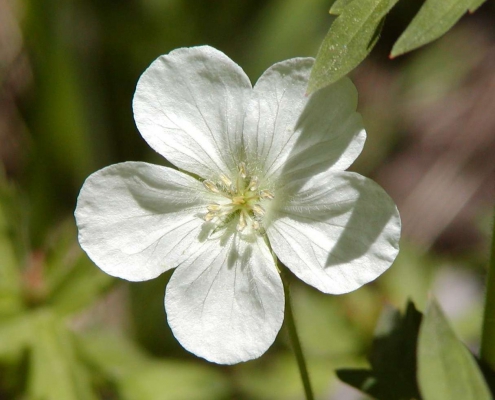
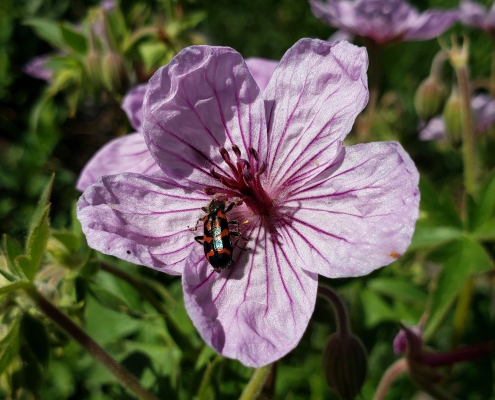
Here in the canyons we have two types of geranium, the Richardson’s geranium (Geranium richardsonii ) and the Sticky Purple Geranium (Geranium viscosissimum). How can we tell the difference? Richardson’s geraniums are white and tend to grow in shady spots, while Sticky Purple geraniums are pink to purple and tend to grow in sunny spots. The Sticky Purple geraniums also have small hairs on the stems and flower stalks that make them feel sticky. Go ahead and feel the plant, but please don’t pick them! While the distinction may seem black and white (or in this case, purple and white) these two species will readily hybridize with one another, producing plants that are a bit more difficult to properly identify.
Paintbrush
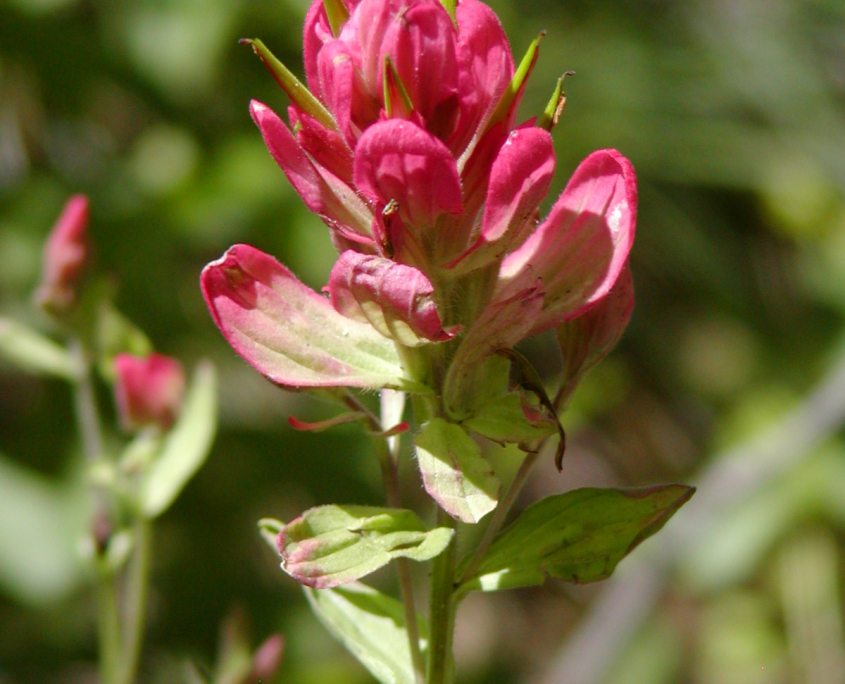
We have a few different species of paintbrush including the Wavy-leaf paintbrush (Castilleja applegatei), Brokenleaf paintbrush (Castilleja rhexiifolia), and even the yellow-colored Sulfur paintbrush (Castilleja sulphurea)! As their names imply, they do look like an artist’s paintbrush. One fascinating thing about these flowers is that they are partially parasitic – while they can produce food through photosynthesis, they also are able to sequester nutrients from the roots of native grasses growing nearby. When you see a Paintbrush, take note of the plants that grow around it!
Single-head Sunflower
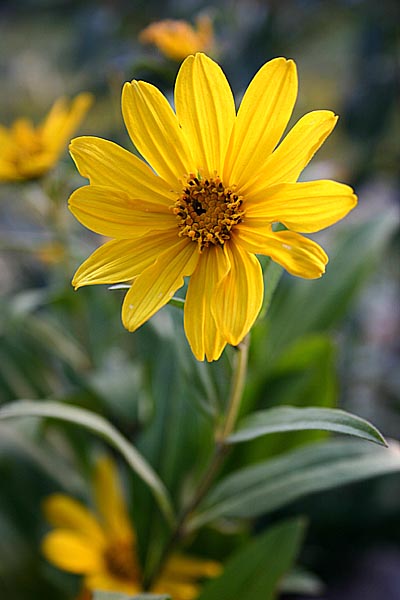
True to its name, the Single-head sunflower (Helianthella uniflora) has one flower per stem. However this can be a little misleading due to the fact that the single-head sunflower is a composite flower. Though it appears to be one single flower head, the inflorescence is actually made up of numerous flowers called ray flowers and disk flowers. The ray flowers are those that look like what you might call a petal, and the disk flowers are those that grow in the center. Take a closer look the next time you see these brilliant yellow blooms!
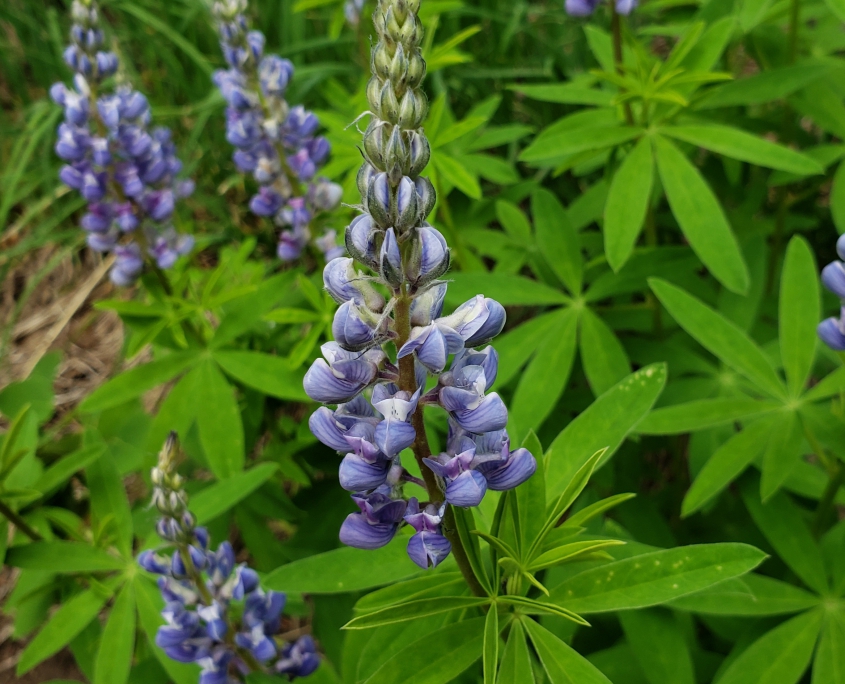
Lupine
This plant can be identified by its purple to blue flowers clustered along a stalk, and palmate leaves with 5-10 radiating leaflets. The name Lupine derives from the latin word meaning “wolf-like”, as this plant was thought to steal nutrients out of the soil like a wolf steals sheep. However, we now know that lupine does quite the opposite. Lupine is what we call a nitrogen-fixer, which means that it captures atmospheric nitrogen, converts it, and deposits it into the soil. This means that lupines, through their role as a nitrogen-fixer, help to make the soil healthier for other plants!
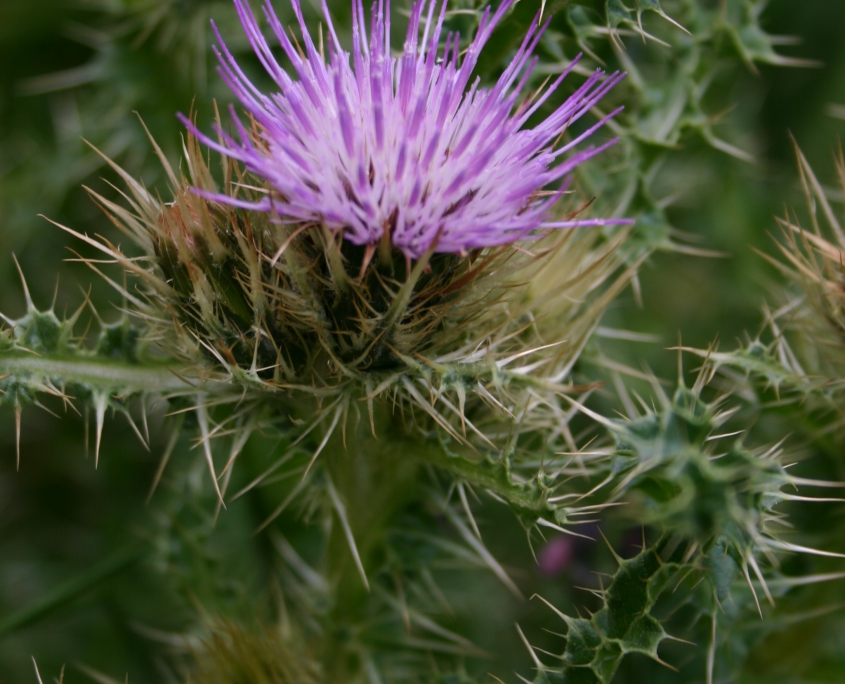
Eaton’s Thistle
Although several species of thistle found in the canyons are invasive, the Eaton’s thistle (and the Utah thistle, this year’s festival flower) are native to the canyons! CCF’s Education Director has a soft spot for these lovely thistles and often describes their leaves as being “perfect”. They can be identified by their lime green color, narrow leaves, and copious amount of spines on both the leaves and flowerhead. When in bloom, the thistle flowers are purple to pink. Interestingly, thistles are in the Aster family which means that they are closely related to flowers such as sunflowers, coneflowers, and even sage!